
51% Confidence: The True Cost of Your Online Footprint
Updated: Sep 21
The Price of Living Online
You vs. Your Data Shadow
Your "data signature" or "data footprint" is the digital shadow you cast with every online action—a composite portrait built from fragments of your digital existence. While your human privacy centers on protected identifiers like your Social Security number, your data privacy encompasses an entirely different realm: the constellation of behavioral breadcrumbs you leave behind. This includes your Facebook network patterns, your phone's location pings, the device you use to browse, and even when you drive past certain intersections with license plate readers. The human you has legal protections and constitutional rights. Your data shadow, however, exists in a largely unregulated wilderness where tech companies and government agencies can piece together intimate details of your life from seemingly innocuous digital traces. Your actual identity might be anonymized, but your data signature can be so unique that it becomes more identifying than your actual fingerprints.
The 51% Economy
Corporations have weaponized your data signature to extract maximum profit through dynamic pricing algorithms. Online retailers routinely charge different prices based on factors such as device type, location, and demographic information ("How retailers use dynamic pricing to get you to pay more," CS Monitor, April 5, 2016). Browse from an expensive MacBook, and you'll see higher prices than someone using an older Android phone. The algorithm assumes your device signals purchasing power and willingness to pay premium prices. (“The price of your phone: How device-based pricing is quietly widening the digital divide,” The Economic Times, December 22, 2024).
But corporate surveillance pales beside government overreach. The NSA's SKYNET program uses machine learning algorithms to analyze cellular network metadata from millions of people and assign each person a numerical score rating their likelihood of being a terrorist. This program only became public knowledge through documents leaked by NSA whistleblower Edward Snowden in 2013-2014 (Spyscape, Security Affairs, May 11, 2015). The algorithm examines around 80 different behavioral properties from your phone usage patterns, travel routes, and communication networks to generate this score (Electronic Products, February 23, 2016). When your score crosses a certain threshold—essentially when the algorithm is about 51% confident you might be a terrorist—you can be added to a kill list for drone strikes ("The NSA's Secret Role in the U.S. Assassination Program," The Intercept, February 10, 2014). This isn't based on concrete evidence of wrongdoing or human intelligence—just mathematical probability derived from your digital footprint. A person could—and many have—die because an algorithm analyzing their phone metadata crossed an arbitrary confidence threshold—of just 51% “confidence.” (“The NSA’s Backdoor Search Loophole,” Brennan Center for Justice, November 14, 2013; “The NSA’s SYKNEY Program may be killing thousands of innocent people;” Benton Institute for Broadband & Society, February 16, 2016). Although it is unclear if SKYNET is still specifically in force, we do know that under Section 702 of the Foreign Intelligence Surveillance Act, the US Government can explicitly:
engage in mass, warrantless surveillance of Americans’ international communications, including phone calls, texts, emails, social media messages, and web browsing. The government claims to be pursuing vaguely defined foreign intelligence “targets,” but its targets need not be spies, terrorists, or criminals. They can be virtually any foreigner abroad: journalists, academic researchers, scientists, or businesspeople. And in the course of this surveillance, the government casts a wide net that ensnares the communications of ordinary Americans on a massive scale — in violation of our constitutional rights. - “Five Things to Know About NSA Mass Surveillance the Coming Fight in Congress,” ACLU, April 11, 2023.

Owners of Our Data Move to Washington

The NSA's surveillance programs operated under presidents who at least maintained some rhetorical commitment to civil liberties. We now face something more dangerous: the emerging alignment between Big Tech and government power structures. As tech moguls assume government roles and government contracts flow to their companies, the surveillance capabilities once constrained by legal frameworks are being turbocharged by Silicon Valley innovation.
Imagine Facebook's friend networks being analyzed to flag people as "foreign agents" based on how many international contacts they maintain, or call logs being processed to identify "suspicious" patterns of overseas communication. The infrastructure for this hyper-surveillance already exists—it's just waiting for the political will to deploy it. When the same people who built your digital cage hold the keys to government power, the confidence thresholds for surveillance and targeting decisions could become whatever percentage justifies the action they want to take.
Digital Self-Defense
Protecting yourself requires both technical steps and behavioral awareness. A Virtual Private Network (VPN) is your first line of defense—it creates an encrypted tunnel between your device and the internet, masking your actual IP address and location. Services like ExpressVPN, NordVPN, or Proton VPN cost around $3-12 monthly and are simple to install: download the app, create an account, choose a server location, and click connect. Your internet traffic now appears to originate from that server rather than your actual location. And this cannot only protect “you” but also beat dynamic pricing. From Cybernews.com:
When you search for flights, your location impacts pricing because airlines employ dynamic pricing algorithms. These algorithms consider your IP address, real-time demand, and your previous browsing history to set ticket costs. That’s why I recommend using a VPN to book flights. With a reliable provider, you can change your virtual location and find lower fares. - “How to get cheaper flights with a VPN: Your expert guide to bypass dynamic pricing,” Cybernews.com, July 14, 2025.
Incognito or private browsing mode prevents your browser from storing cookies, search history, and site data locally, but it doesn't hide your activity from your internet provider, employer, or the websites you visit. It's useful for preventing others who use your device from seeing your browsing history, but offers limited privacy protection against external surveillance.
Using public computers at libraries or internet cafes can provide anonymity, but comes with risks. These computers may have keyloggers or malware that capture your passwords and personal information. If you use public computers, avoid accessing sensitive accounts, always log out completely, and consider using a VPN even on public machines.
Browser plugins like TrackMeNot and AdNauseam can help obscure your digital footprint by automatically generating random search queries and clicking on ads in the background. These tools flood surveillance systems with fake data, making it harder to discern your actual interests and browsing patterns from the noise. The goal isn't to become invisible—that's nearly impossible—but to make your data signature less distinctive and harder to weaponize against you.
Conclusion
Your data signature exists whether you acknowledge it or not, compiled from every digital interaction you make. While corporations use this information to manipulate your purchasing decisions and extract maximum profit, government agencies have shown they're willing to make life-or-death decisions based on algorithmic analysis of your digital breadcrumbs. The convergence of Big Tech and government power only amplifies these risks, creating a surveillance infrastructure that would have been unimaginable just decades ago. The true cost of your online footprint may be more than you know.
The 51% confidence threshold represents more than just a statistical measure—it's a stark reminder that in our data-driven world, probability calculations about your digital behavior can have very real, very permanent consequences. Taking steps to protect your privacy isn't paranoia; it's a recognition that your data signature is being used by others every day, and that the only person responsible for defending it is you.
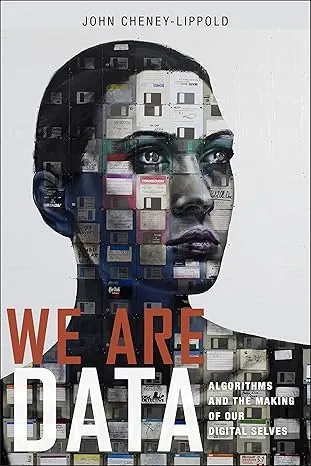
For additional information on this topic (and my inspiration for this post) please check out “We Are Data: Algorithms and the making of our digital selves” by John Cheney-Lippold.


Comments